
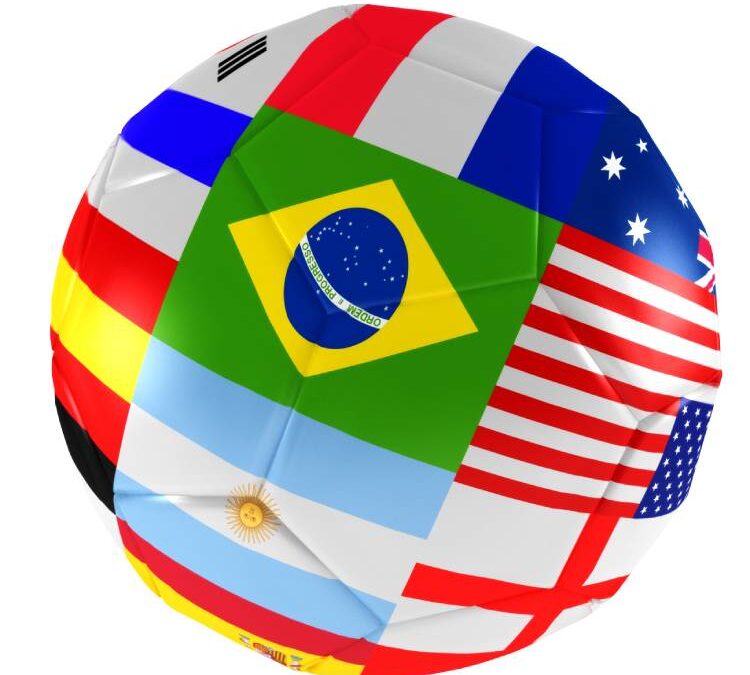
I was truly stumped as to what the topic of this month’s column was going to be and kept trying to think of clever ideas. Until, there it was right in center stage all along SOCCER – World Cup in particular. Living in Los Angeles we have been totally absorbed in the matches and the displays of National Pride by all countries. What speaks louder than a Team Shirt or is it a Jersey or is it part of a Kit?
But first – Shirt and or Jersey was what they were first called. However, Jersey’s as in American football were typically heavier material perhaps dependent on climate and roomier. The shirt is slimmer, lighter weight and tailored to the player’s body. The kit is the whole kit and kaboodle as in Shirt, Shorts and Socks typically coordinated and of course now symbolic of the sponsors.
The evolution of this unique garment from practical to Iconic is very interesting. Soccer jerseys evolved from heavy wool and cotton shirts worn to distinguish teams in the 1870s to what is now a multibillion-dollar global industry. Today, they are a blend of high-performance sportswear and cultural fashion, shifting from simple team colors to synthetic, technologically advanced materials featuring prominent brand sponsors and squad numbers.
The Early Years (1870s – 1920s)
In the sport’s infancy, players simply wore everyday clothes with varying colored caps, scarves, or belts to tell teams apart. As the sport gained traction in the late 19th century, matching cotton and wool jerseys were introduced. Interestingly, goalkeepers initially wore the exact same kits as outfield players, but in 1909, the English Football Association mandated that goalkeepers must wear a distinct color for clarity. Making them and apt target in the net.
Numbers and Materials (1930s – 1960s)
At the 1930 World Cup in Uruguay, teams competed in heavy, short-sleeved wool jerseys designed strictly for function. Player numbers were first tested in the 1930s and permanently standardized after World War II, initially corresponding to specific positions (1 through 11). See practicality was at “play” and the choices were functional rather than marketing billboards for a product or Corporation.
Commercialization and Synthetics (1970s – 1980s)
The 1970s marked a massive shift. German club Eintracht Braunschweig became the first professional team to feature a commercial sponsor on their shirt in 1973. Manufacturers like Adidas began replacing restrictive wool with lighter synthetic materials like polyester, introducing bold shoulders and sleeve stripes. Player names also became a mainstay on the backs of kits by the late 20th century. This is Big in my opinion as the fans may or may not have been familiar with all the players and having their name on their back certainly cured that.
The Modern Era (1990s – Present)
As we all know in the 1990s, brands like Nike revolutionized fabric technology, introducing moisture-wicking materials and highly stylized, vibrant designs. By the 21st century, shirts crossed over from the pitch to the streets, “Blokecore” (A fashion trend that mixes vintage soccer jerseys with everyday streetwear) the fashion became a thing and generated billions in sales. The overall look is meant though feel unforced, “blokey” (British slang for a regular guy or lad), and laid -back, as if you just threw it on for the day.
The Blokecore trend was popularized by social media typically pairing retro football tops with baggy denim and casual sneakers. It was basically British Pub meets Sports Culture.
A jersey typically earns its “vintage” status when it is over two decades old. Most avid collectors consider shirts from the 1990s, and older in the category.
It will be interesting to see which team jerseys become iconic from this World Cup – but my guess it that Norway and Argentina may be top of list.
Dress for the day you want – NOT – the day you are given because, Aging is inevitable while Growing Old is Optional.
Image Credit: ID 14644641 @ Roopert77 | Dreamstime.com